Proposals to Avoid War: Corwin, Crittenden & Beyond
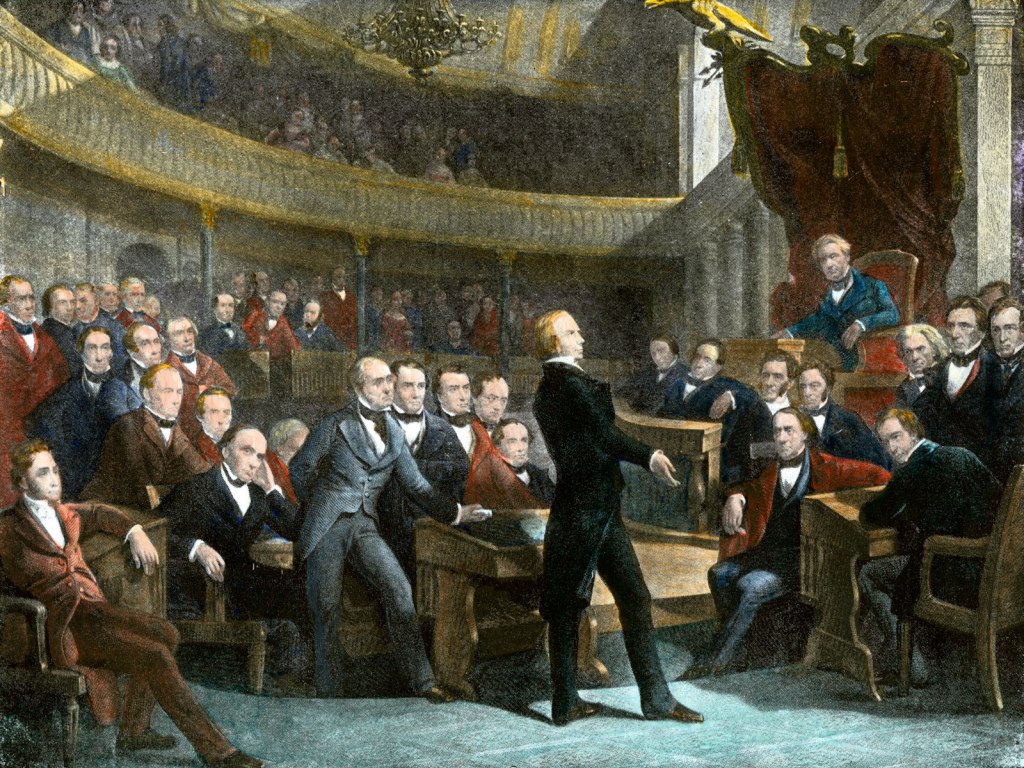
After the election of 1860, it was clear that the southern secession movement was going to accelerate. Both the House and the Senate took up discussion of compromises to prevent the crisis from escalating.
Corwin Amendment
In the House, a committee submitted a plan for a constitutional amendment that its members were certain would obviate the need for slavery. Initially, the proposed amendment was voted down. Then the chair of the committee introduced his own text, and it too was voted down. The original text was taken up and a second vote was taken, but it failed to reach the required 2/3 vote to pass. Finally, the text of the chairman’s proposal was voted on a second time, and passed with just enough votes.
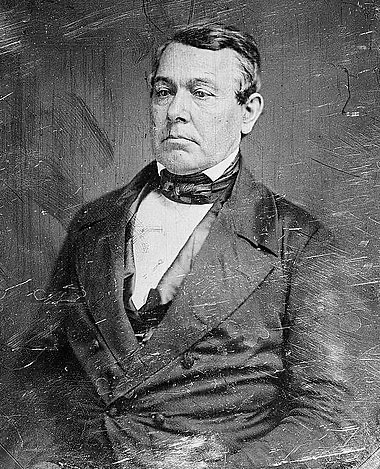
Thomas Corwin was the chair of The Committee of Thirty-three that proposed the Corwin Amendment. It read:
“No amendment of this Constitution, having for its object any interference within the States with the relations between their citizens and those described in second section of the first article of the Constitution as “all other persons”, shall originate with any State that does not recognize that relation within its own limits, or shall be valid without the assent of every one of the States composing the Union.”.
Basically, it would have protected slavery forever constitutionally, insisted on enforcement of the fugitive slave law, and repealed any state personal liberty laws.
The Senate took up the proposed amendment on March 2, 1861, debating its merits without a recess through the pre-dawn hours on March 4. When the final vote was taken, the amendment passed with exactly the needed two-thirds majority – 24–12. Once again, we see evidence that saving the Union was more important to much of the North than abolition, at this moment in history.
This would have been the 13th amendment if it had passed the states voting. Five states voted in favor of it, 3 of which have rescinded its vote legally. In theory, it remains an active bill. Exactly what would happen were it to pass given the actual 13th-15th amendments is an interesting legal debate.
President James Buchanan actually signed the bill. This is not part of the amendment process and was unnecessary, as the president has no constitutional involvement in amendments. In his inaugural address,
The old myth that since Lincoln accepted the Corwin Amendment, it proved he didn’t care about slavery is a willful misreading of history. Lincoln raised the topic in his First Inaugural Address and said, “I have no objection to its being made express and irrevocable.” But of course, Lincoln understood that it merely reiterated what was already in the Constitution. And being the master politician, he knew it could never pass the state legislatures. This was why it could never have done what needed to be done: several New England states wanted to see abolition and all southern states wanted to expand it to the territories.
The Crittenden Compromise
From December 1860 to February 1861, John J Crittenden of Kentucky worked on a series of Constitutional Amendments with the intent of avoiding a civil war. The Crittenden Compromise, as it came to be known, proposed six constitutional amendments and four congressional resolutions. The idea was to find a middle ground between the agendas of the North and the South. The Border States in particular were interested in finding a compromise to the crisis.
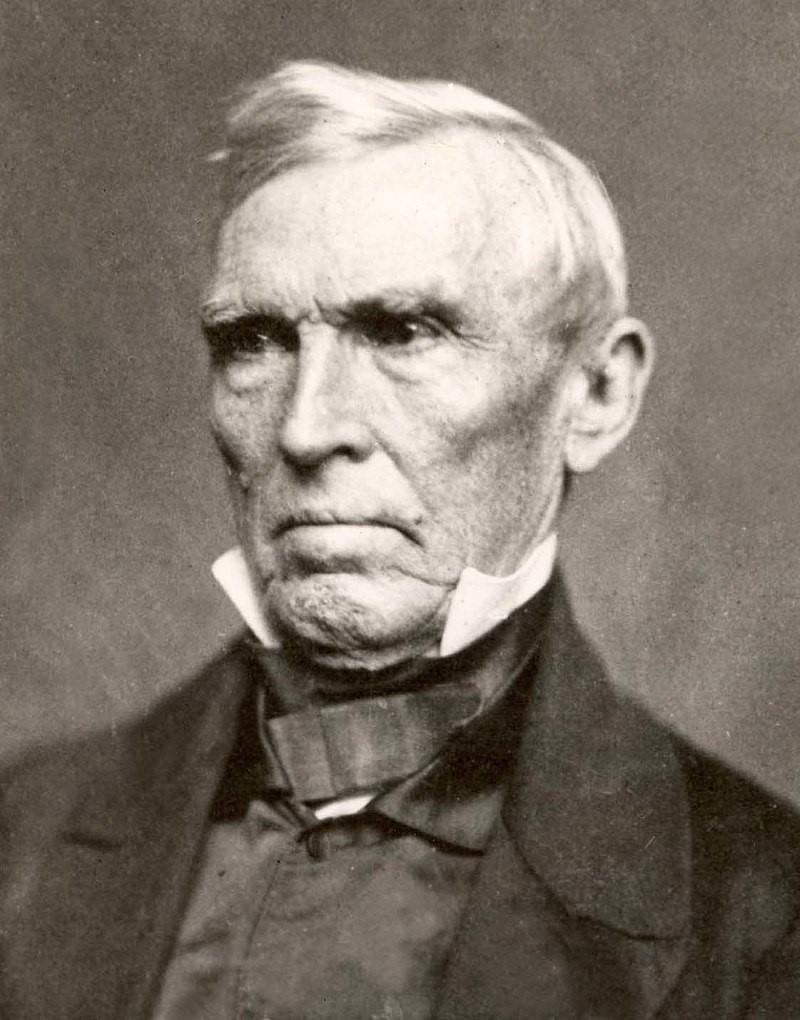
It proposed 6 constitutional amendments and 4 congressional resolutions:
Amendments to the Constitution
- Slavery would be prohibited in any territory of the United States “now held, or hereafter acquired”, north of latitude 36 degrees, 30 minutes line. In territories south of this line, slavery of the African race was “hereby recognized” and could not be interfered with by Congress. Furthermore, property in African slaves was to be “protected by all the departments of the territorial government during its continuance”. States would be admitted to the Union from any territory with or without slavery as their constitutions provided.
- Congress was forbidden to abolish slavery in places under its jurisdiction, such as a military post, within a slave state.
- Congress could not abolish slavery in the District of Columbia so long as it existed in the adjoining states of Virginia and Maryland and without the consent of the District’s inhabitants. Compensation would be given to owners who refused consent to abolition.
- Congress could not prohibit or interfere with the interstate slave trade.
- Congress would provide full compensation to owners of rescued fugitive slaves. Congress was empowered to sue the county in which obstruction to the fugitive slave laws took place to recover payment; the county, in turn, could sue “the wrong doers or rescuers” who prevented the return of the fugitive.
- No future amendment of the Constitution could change these amendments or authorize or empower Congress to interfere with slavery within any slave state.[7]
Congressional resolutions
- That fugitive slave laws were constitutional and should be faithfully observed and executed.
- That all state laws that impeded the operation of fugitive slave laws, the so-called “Personal liberty laws”, were unconstitutional and should be repealed.
- That the Fugitive Slave Act of 1850 should be amended (and rendered less objectionable to the North) by equalizing the fee schedule for returning or releasing alleged fugitives and limiting the powers of marshals to summon citizens to aid in their capture.
- That laws for the suppression of the African slave trade should be effectively and thoroughly executed.
In essence, this was basically the Missouri Compromise extended to the Pacific Ocean. It was therefore in direct conflict with the Republican Party Platform and Lincoln’s stance.
Lincoln vehemently opposed the Crittenden compromise on grounds that he opposed any policy permitting the continued expansion of slavery. Basically, the concept of these initiatives was to reestablish the Missouri Compromise. Both the House of Representatives and the Senate rejected Crittenden’s proposal. The Republicans felt it was essentially giving in to all of the South’s demands.
The Crittenden Compromise was a Senate initiative. A specially selected Committee of Thirteen discussed it. The committee rejected the compromise on December 22 by a 7–6. Crittenden later brought the issue to the floor of the Senate as a proposal to make his compromise subject to a national referendum. Still, the Senate rejected it on January 16 by a 25–23.
Although Crittenden’s Compromise never had any chance of being accepted by the Republicans, the document is quite significant in the context of American history. From the Southern perspective, the proposal meant that if the North gave in to all of its demands, secession would be avoided. Thus, to secessionists, charges of never trying to find a peaceful solution to avoid secession aren’t accurate. It was basically blackmail. Therefore, the Republican’s rejection of the Compromise became evidence to the secessionists that breaking away from the Northern states was the right thing to do.
In a practical sense, if the Compromise had been accepted, it would have dramatically changed the entire future of the United States. For example, Crittenden’s Compromise would have written slavery into the Constitution, making it nearly impossible to ever bring it to an end. It is astounding to realize that just a few votes changed the country forever.
https://www.history.com/news/crittenden-compromise-slavery-civil-war
Crittenden II
But the votes against the Crittenden Compromise were so close despite Lincoln’s opposition that another attempt was made. A modified version was proposed by Sen Crittenden.
In the House, the Committee of Thirty-three reported it had reached agreement on a constitutional amendment protecting slavery, and it did pass the Senate, as noted previously. It is very interesting that almost no civil war aficionado knows that there were actually two Crittenden Compromises, and that discussions generally confuse them in the discussions.
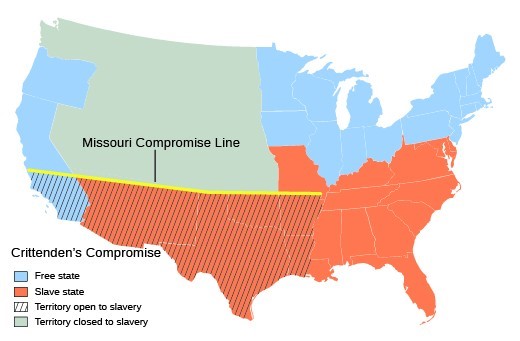
The Second Crittenden Proposal was made basically by a group of Southern Unionists. It merely proposed the Missouri Compromise line all the way to the Pacific. The second Crittenden compromise was rejected in the Senate 28-7 .The proposal was a constitutional amendment to protect slavery where it existed and the immediate admission of New Mexico Territory as a slave state. This latter proposal would result in a de facto extension of the Missouri Compromise line for all existing territories.
Crittenden failed because the difference of opinion was about extension of slavery into the territories, and this would have established extension. What had changed was that the North wanted to see slavery disappear eventually, and recognized that preventing its spread would do that. The entire existence of the Republican Party was predicated on a commitment to containing slavery with the ulterior motive that ultimately, it would disappear due to its economic disadvantages.
The Tyler Initiative
With the collapse of discussions around the Crittenden Compromise, a meeting of 131 leading men met at the Willard Hotel. The purpose was to avoid secession of any additional states beyond the 7 that already had.
Former President John Tyler from Virginia was the leader of this group. At the time, he was not a member of any legislature. His state did elect him to its secession convention but he felt a final collective effort to save the country should be made.
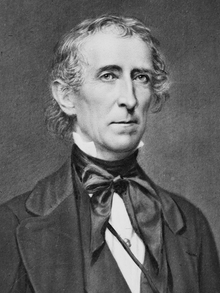
At the time of the meeting, his granddaughter was raising the flag at the Montgomery Convention. All seven seceded states did not attend his meetings. Neither did 6 northern free states. After several weeks of debate, essentially it proposed the Crittenden Compromise. Specifically, it did not limit expansion of slavery to the territories, losing Republican support, and did not protect slavery in the territories, losing southern Democrat support.
The Confederate Commission
On February 15, 1861, a resolution was passed in the Confederate Congress calling on the Jefferson Davis to appoint a commission to negotiate relations with the US government, A commission of 3 men were appointed by President-elect Davis for this purpose. Exactly what they had the goal of achieving, what they could negotiate about, and how much they spoke for their government are ambiguous. Most likely, they had no such powers; but had they been officially greeted, international law would have guaranteed southern independence, and most likely, that was their whole purpose.
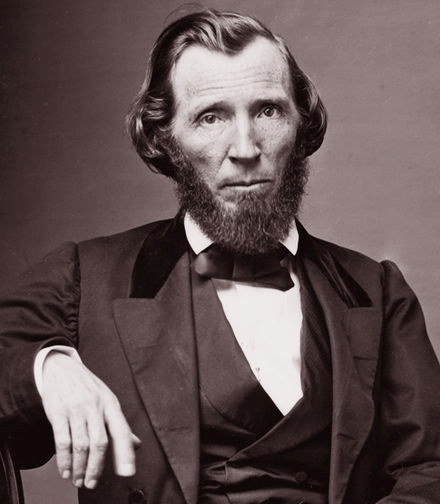
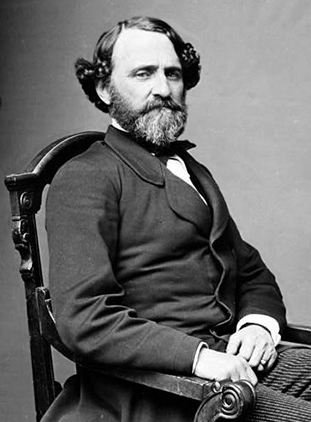
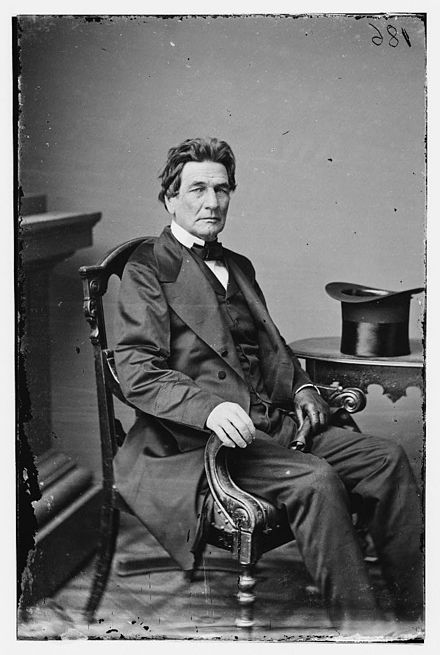
If Davis actually intended this commission to succeed, he didn’t understand international law; much more likely is that he did know, and wanted it to fail. Davis wrote a letter to Lincoln to introduce the commissioners as representatives of the CSA. Had Lincoln or Seward received them, it would have been an official recognition of the CSA. Unless you think Davis was poorly advised, then he did this purposely to ensure that no discussion would occur.
This is from the official letter to Lincoln:
“I have invested them with full and all manner of power and authority for and in the name of the Confederate States to meet and confer with any person or persons duly authorized by the Government of the United States being furnished with like powers and authority, and with them to agree, treat, consult, and negotiate of and concerning all matters and subjects interesting to both nations, and to conclude and sign a treaty or treaties, convention or conventions, touching the premises, transmitting the same to the President of the Confederate States for his final ratification by and with the consent of the Congress of the Confederate States.”
The representatives were Martin J. Crawford of Georgia, John Forsyth of Alabama, and Andre B. Roman of Louisiana. Crawford would become a colonel in the cavalry under General Wheeler. Forsyth eventually became Chief of Staff in the Army of Tennessee. Roman was a two time Louisiana governor and was retired by 1861. He lost all of his wealth and property during the state’s occupation.
Take Away Message
All of these compromise proposals were too little too late, and never really addressed let alone settle the fundamental issues at hand. Perhaps had these been proposed before Dred Scott, maybe before South Carolina actually made secession de facto, maybe something might have been worked out, but its highly doubtful. The plantation owners who held the power and the wealth were never going to give it up peacefully. The southern political leaders had planned secession for a decade and they believed this was the moment, so no compromise was ever possible. And, while the majority of northern (my definition of “northern” is any state above the Missouri Compromise line except Virginia) public opinion had not yet moved to favor abolition, several states had, and the trend was clear that over time, perhaps a long time, the north would eventually want to see slavery end.
 The Civil War Center
Leave a Reply